
As a supplier of corner crimping machines, I've had the privilege of witnessing firsthand the evolution and significance of these machines in various industries, especially in the manufacturing of aluminum windows and doors. One of the most common questions I encounter is about the differences between hydraulic corner crimping machines and mechanical ones. In this blog, I'll delve into the technical, operational, and practical aspects that set these two types of corner crimping machines apart.
Working Principle
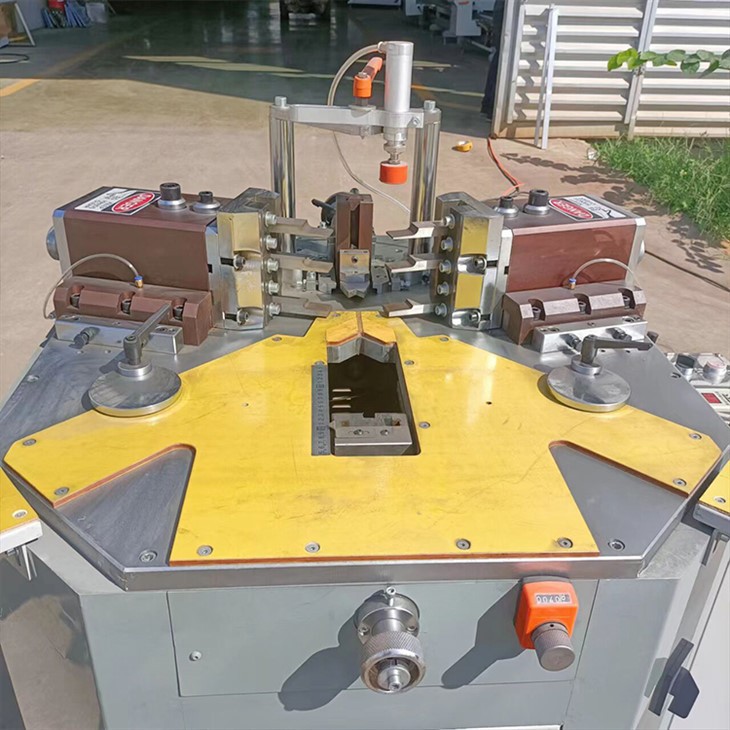
The fundamental difference between hydraulic and mechanical corner crimping machines lies in their working principles. A mechanical corner crimping machine operates based on mechanical force transmission. It typically uses a motor to drive a series of gears, levers, and cams to generate the necessary force for crimping. The movement and force application are strictly controlled by the mechanical structure, which translates the rotational motion of the motor into linear motion at the crimping head.
On the other hand, a hydraulic corner crimping machine utilizes hydraulic power. It consists of a hydraulic pump, a hydraulic cylinder, and a control valve system. The hydraulic pump pressurizes the hydraulic fluid, which is then directed to the hydraulic cylinder. The pressure of the hydraulic fluid in the cylinder creates a powerful linear force that drives the crimping head. This hydraulic force can be precisely controlled by adjusting the pressure and flow rate of the hydraulic fluid through the control valves.
Force and Precision
When it comes to the force exerted during the crimping process, hydraulic corner crimping machines have a clear advantage. Hydraulic systems can generate a significantly higher force compared to mechanical systems. The hydraulic principle allows for the amplification of force, enabling the machine to handle thicker and more rigid materials with ease. For example, when crimping the corners of large - size aluminum window frames, a hydraulic machine can provide the necessary force to ensure a tight and secure crimp.
In terms of precision, hydraulic machines also outshine mechanical ones. The hydraulic control system allows for fine - tuning of the crimping force and stroke. The pressure in the hydraulic system can be accurately adjusted to maintain a consistent crimping quality across multiple workpieces. In a mechanical machine, the force is limited by the mechanical structure, and it can be challenging to achieve the same level of precision, especially when dealing with materials of different thicknesses or hardness.
Speed and Productivity
The speed of operation is another factor that differentiates these two types of machines. Hydraulic corner crimping machines generally offer faster cycle times. The hydraulic system can quickly build up and release pressure, allowing for rapid movement of the crimping head. This is particularly beneficial in high - volume production environments where every second counts. A hydraulic machine can complete more crimping operations in a given time compared to a mechanical one.

Mechanical machines, however, may have a slower speed due to the complexity of their mechanical transmission system. The gears, levers, and cams need to undergo a series of movements to perform the crimping operation, which can increase the cycle time. For small - scale production or jobs that require less frequent crimping, the speed difference may not be as critical, but in large - scale manufacturing, the productivity advantage of hydraulic machines becomes evident.
Maintenance and Durability
Maintenance requirements and durability are important considerations for any manufacturing equipment. Mechanical corner crimping machines have a relatively simple mechanical structure, which makes them easier to understand and repair for operators with basic mechanical knowledge. However, the moving mechanical parts are subject to wear and tear over time, especially the gears and cams. Regular lubrication and replacement of worn - out parts are necessary to keep the machine in good working condition.
Hydraulic corner crimping machines, while more complex in terms of their hydraulic system, are generally more durable. The hydraulic components are designed to withstand high pressures and heavy loads. Moreover, the hydraulic system is sealed, which protects the internal components from dust, dirt, and other contaminants. However, hydraulic machines require more careful maintenance, such as checking the hydraulic fluid level and quality regularly and ensuring the proper functioning of the control valves. Any leakage in the hydraulic system can lead to a loss of pressure and affect the machine's performance.
Cost
The initial cost of a hydraulic corner crimping machine is usually higher than that of a mechanical one. The hydraulic system, which includes the pump, cylinder, and control valves, adds to the overall cost of the machine. However, it's important to consider the long - term cost. As mentioned earlier, hydraulic machines offer higher productivity, better precision, and longer durability. In the long run, the increased productivity and reduced waste due to higher precision can offset the higher initial investment.
Mechanical corner crimping machines are more affordable upfront, making them a popular choice for small businesses or those with a limited budget. They can still perform well for basic crimping tasks, especially for low - volume production.
Applications
The choice between a hydraulic and a mechanical corner crimping machine also depends on the specific applications. If you're involved in large - scale manufacturing of aluminum windows and doors, Corner Crimping Machine for Aluminum Window and Door a hydraulic corner crimping machine is likely the better option. It can handle the high - volume production requirements, ensure consistent quality, and work with a variety of aluminum profiles.
For small workshops or custom - made aluminum window and door projects, a mechanical corner crimping machine may be sufficient. It can provide a cost - effective solution for less demanding applications. Additionally, Aluminium Window Crimping Machine the simplicity of the mechanical machine can be an advantage for operators who are new to corner crimping.
Conclusion
In conclusion, both hydraulic and mechanical corner crimping machines have their own unique features and advantages. Hydraulic machines offer high force, precision, speed, and durability, making them ideal for large - scale production. Mechanical machines, on the other hand, are more affordable and easier to maintain, suitable for small - scale or custom - made projects.
As a supplier of corner crimping machines, I understand that each customer has different needs and requirements. Whether you're looking for a powerful hydraulic machine for high - volume production or a cost - effective mechanical machine for small - scale work, I'm here to help you make the right choice. If you're interested in purchasing a corner crimping machine or have any questions about our products, feel free to contact me for further discussion and negotiation. We're committed to providing you with the best solutions and high - quality machines to meet your manufacturing needs.
References
- Industry reports on metalworking machinery
- Technical manuals of corner crimping machines
- Interviews with industry experts and manufacturers